

Home › Destinations › Aswan region › Abu Simbel
Temple · Upper Egypt
Abu Simbel
Two colossal rock-cut temples built by Ramesses II and relocated in one of the greatest archaeological rescue operations in history. Overlooking Lake Nasser, Abu Simbel is among the most iconic monuments of ancient Egypt.
Over 3,200
Years old
About this attraction
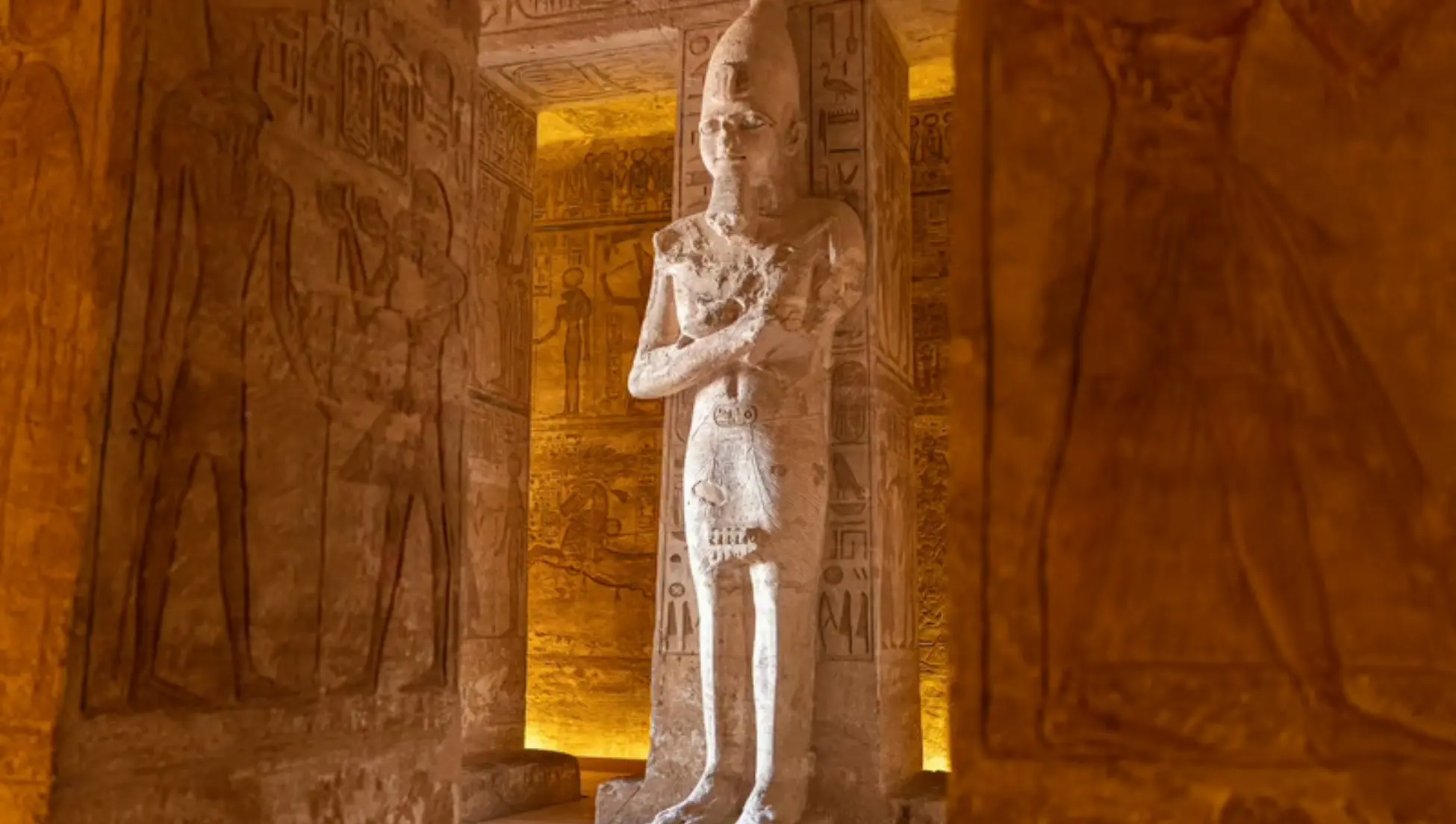
Located near Egypt’s southern border with Sudan, Abu Simbel consists of two monumental rock-cut temples commissioned by Pharaoh Ramesses II during the 13th century BC.
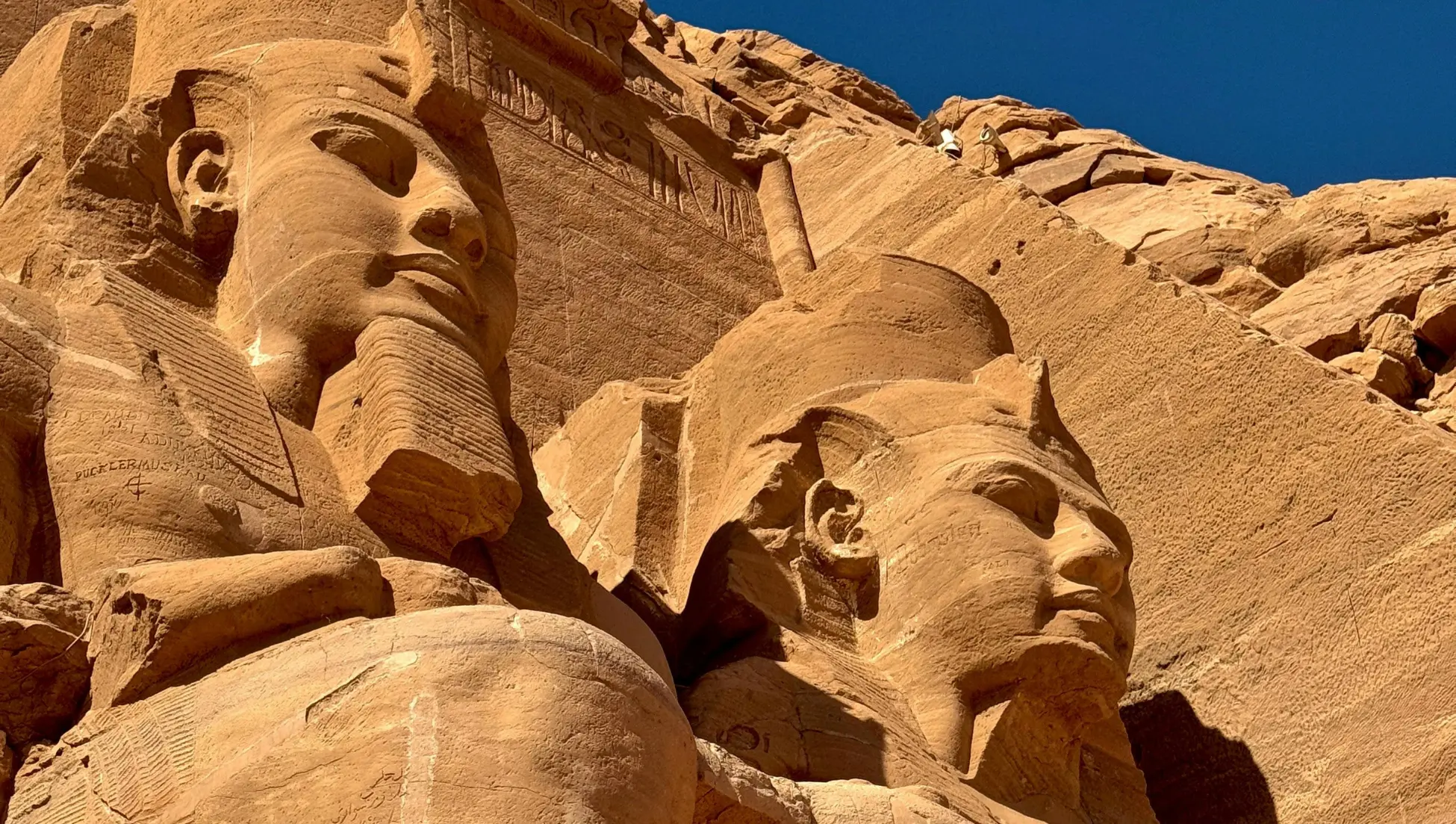
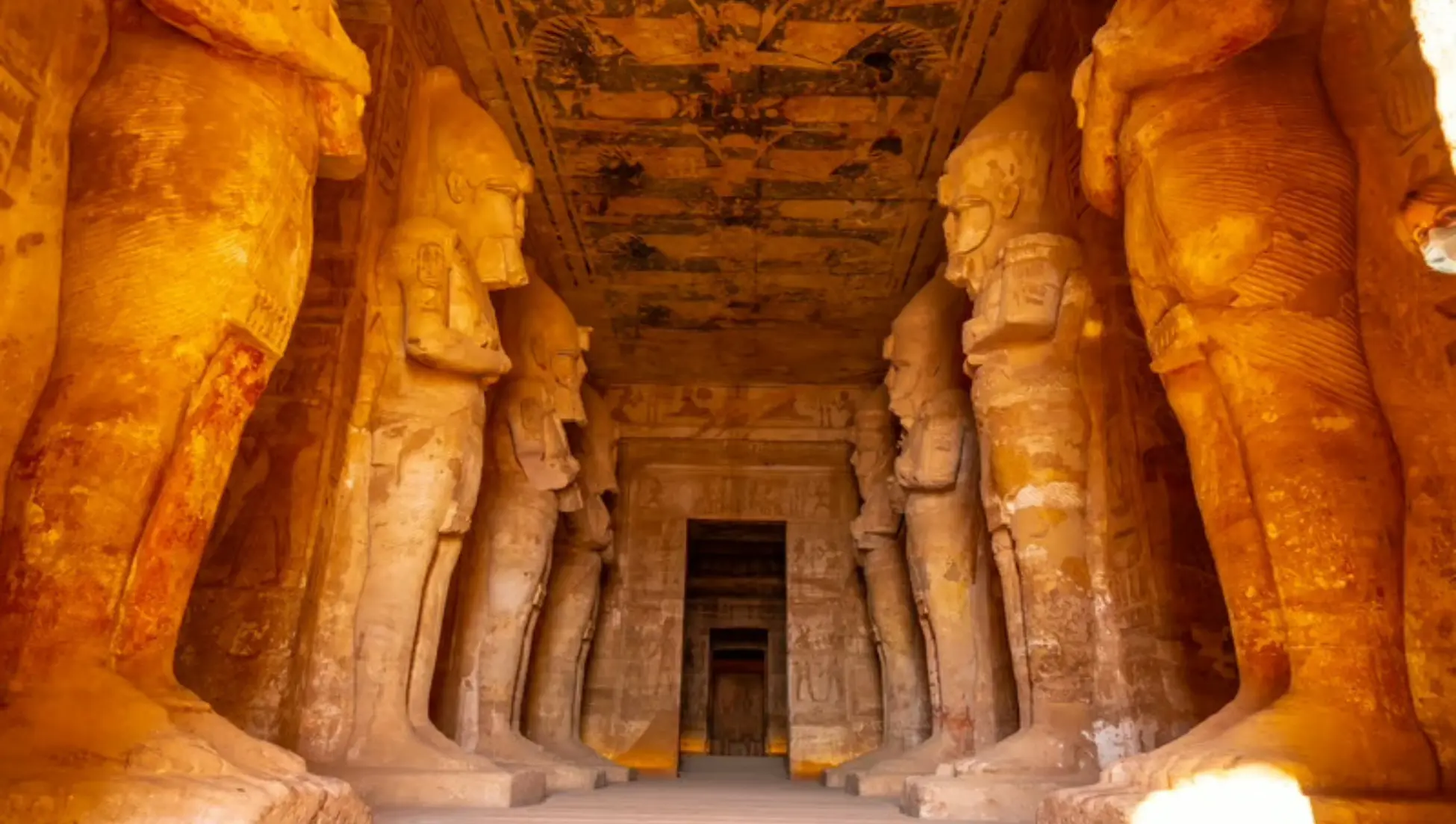
The larger temple was dedicated to the gods Amun-Ra, Ra-Horakhty, Ptah, and to Ramesses II himself. Its façade is dominated by four colossal seated statues of the king, each standing approximately 20 meters (66 feet) high. Smaller statues at their feet depict members of the royal family, including Queen Nefertari, the king’s children, and his mother.
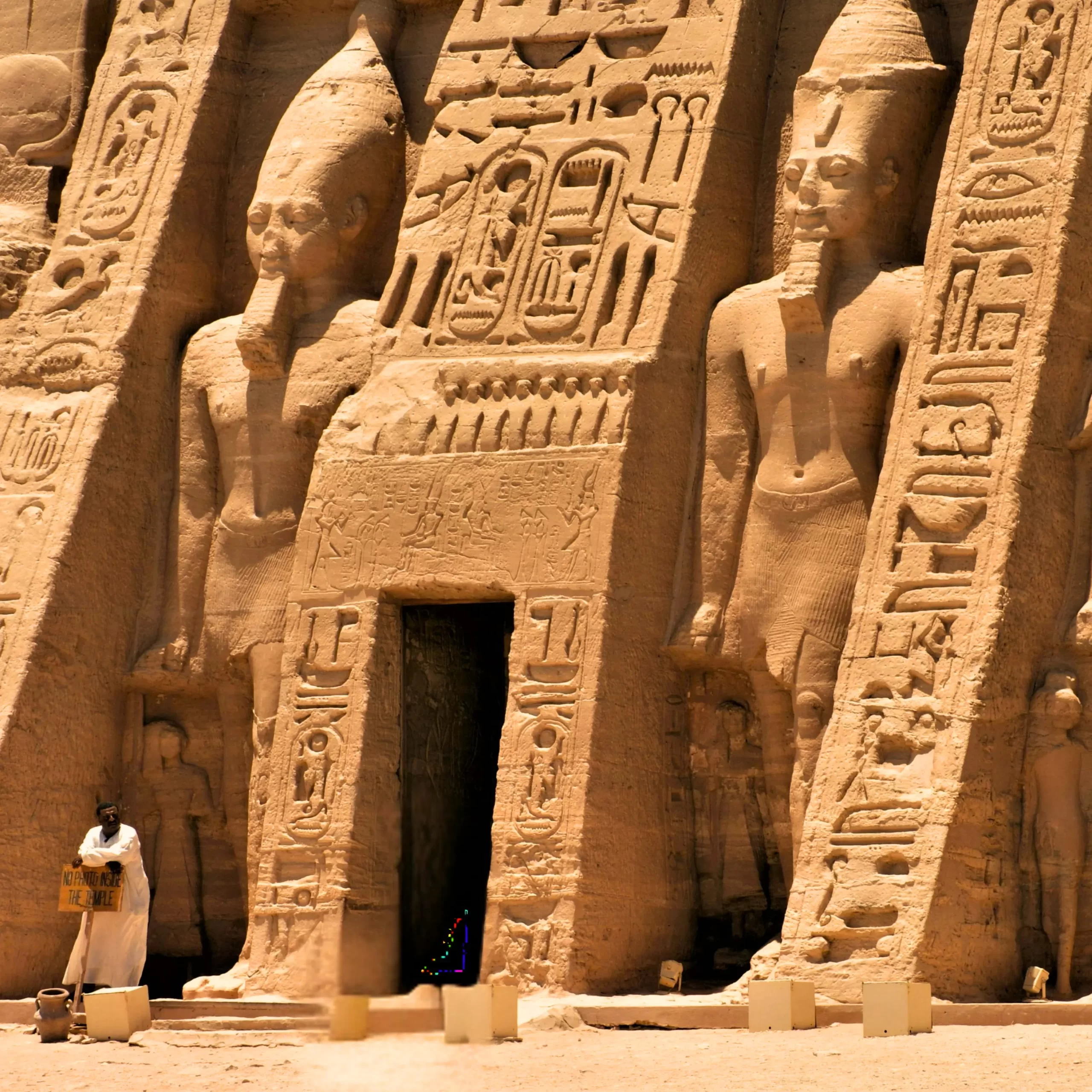
The smaller temple is dedicated to the goddess Hathor and Queen Nefertari, Ramesses II’s beloved wife. Its façade features six standing statues, uniquely giving equal prominence to the queen alongside the king.
In the 1960s, the construction of the Aswan High Dam threatened to submerge the temples beneath the waters of Lake Nasser. Between 1964 and 1968, an international UNESCO-led campaign carefully dismantled the temples into thousands of blocks weighing between 2.7 and 19 tons each. The monuments were then reassembled 64 meters higher and 180 meters inland from their original location, preserving them for future generations.
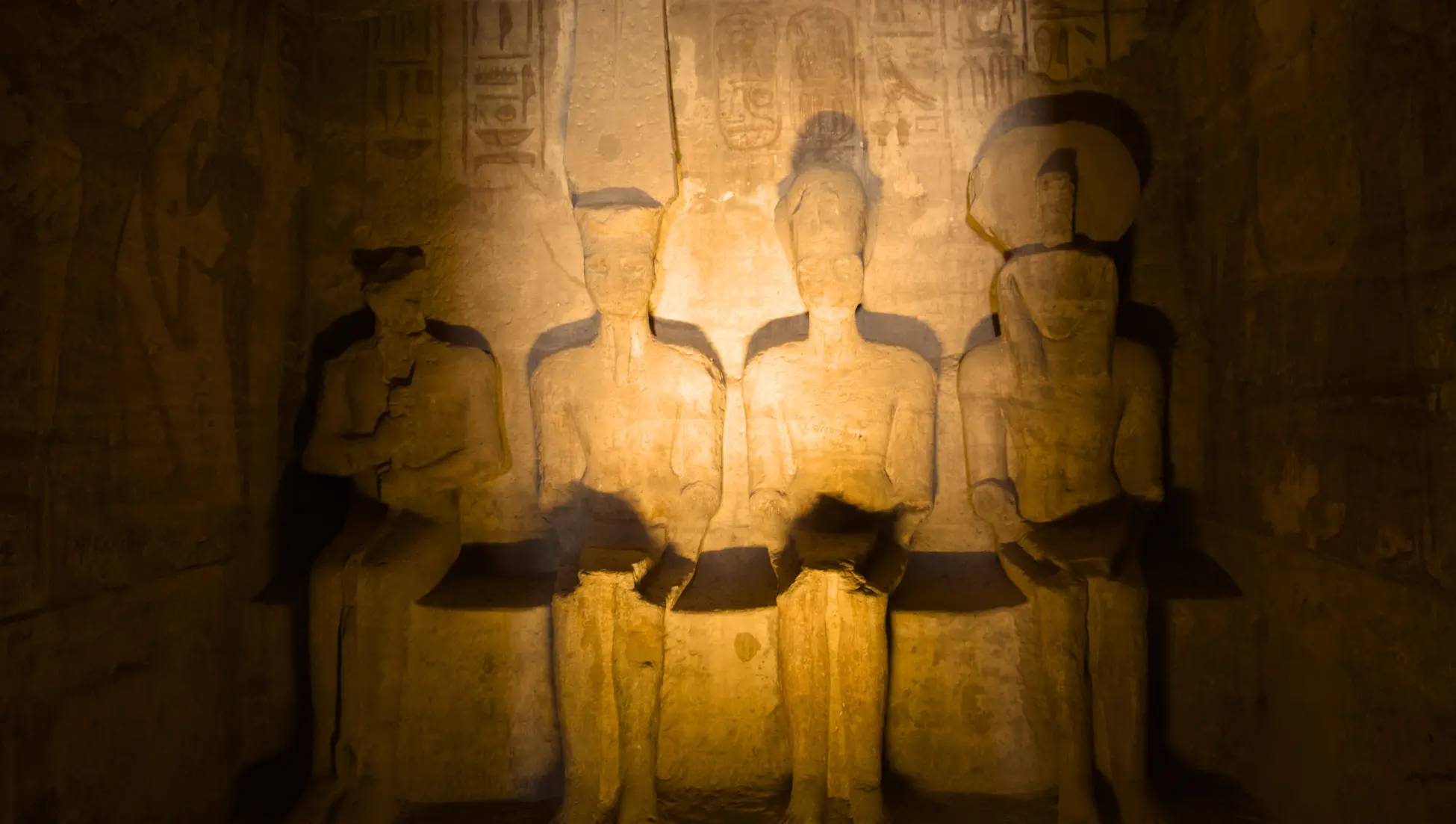
One of Abu Simbel’s most remarkable features is its solar alignment. Twice a year, on 22 February and 22 October, the rising sun penetrates deep into the sanctuary of the Great Temple, illuminating the statues of Amun-Ra, Ra-Horakhty, and the deified Ramesses II. Only Ptah, associated with the underworld, remains in shadow.
Abu Simbel was inscribed as a UNESCO World Heritage Site in 1979 and remains one of Egypt’s most celebrated archaeological treasures.
The Great Temple of Ramesses II
A masterpiece of ancient Egyptian architecture featuring four colossal statues of Ramesses II guarding the entrance.
Temple of Hathor and Nefertari
One of the few temples in ancient Egypt dedicated to a queen, showcasing the importance of Nefertari in Ramesses II's reign.
The Solar Alignment Phenomenon
Twice each year, sunlight reaches the innermost sanctuary in a spectacular display of ancient engineering and astronomical knowledge.
“The relocation of Abu Simbel stands as one of humanity’s greatest achievements in heritage conservation. The operation saved not only two extraordinary temples but also demonstrated international cooperation in preserving world history.”
— Historical context note for guides
Visitor tips
Arrive early in the morning to avoid crowds and the midday heat.
Bring a hat, sunscreen, and plenty of water, especially during the summer months.
Photography is allowed in the exterior areas, but restrictions may apply inside the temples.
Consider attending the Sound and Light Show for a unique evening experience.
Comfortable walking shoes are recommended as the site requires moderate walking.
Visit Information
Hours: 5:00 – 18:00
Entry Fees: Subject to official Ministry of Tourism pricing
Best Time: October – April
Duration: 1.5–2 Hours Average
Access: Mostly flat pathways with some stairs
Visit Abu Simbel from Aswan
Most visitors reach Abu Simbel as a day trip from Aswan, either by road (approximately 3–4 hours each way) or by a short domestic flight. The journey rewards travelers with one of the most unforgettable monuments in Egypt.
Nearby attractions
Nasser Lake
Scenic reservoir and Nubian landscapes
Adjacent to the site
Qasr Ibrim
Ancient fortress overlooking Lake Nasser
70 km north
Wadi El Seboua
Temple complex built by Ramesses II
150 km north
Kalabsha Temple
The largest relocated Nubian temple