

Home › Destinations › Upper Egypt › Edfu Temple
Temple · Upper Egypt
Edfu Temple
One of the best-preserved temples in Egypt, dedicated to Horus, the falcon god. A magnificent Ptolemaic monument where towering walls, detailed hieroglyphs, and sacred chambers reveal the grandeur of ancient Egyptian religion.
Approx. 2,200
Years old
About this attraction
Edfu is a bustling market town located between Luxor and Aswan. Most visitors reach the Temple of Horus by traditional horse-drawn carriage from the Nile docks, offering a glimpse into everyday life in Upper Egypt while supporting the local economy.
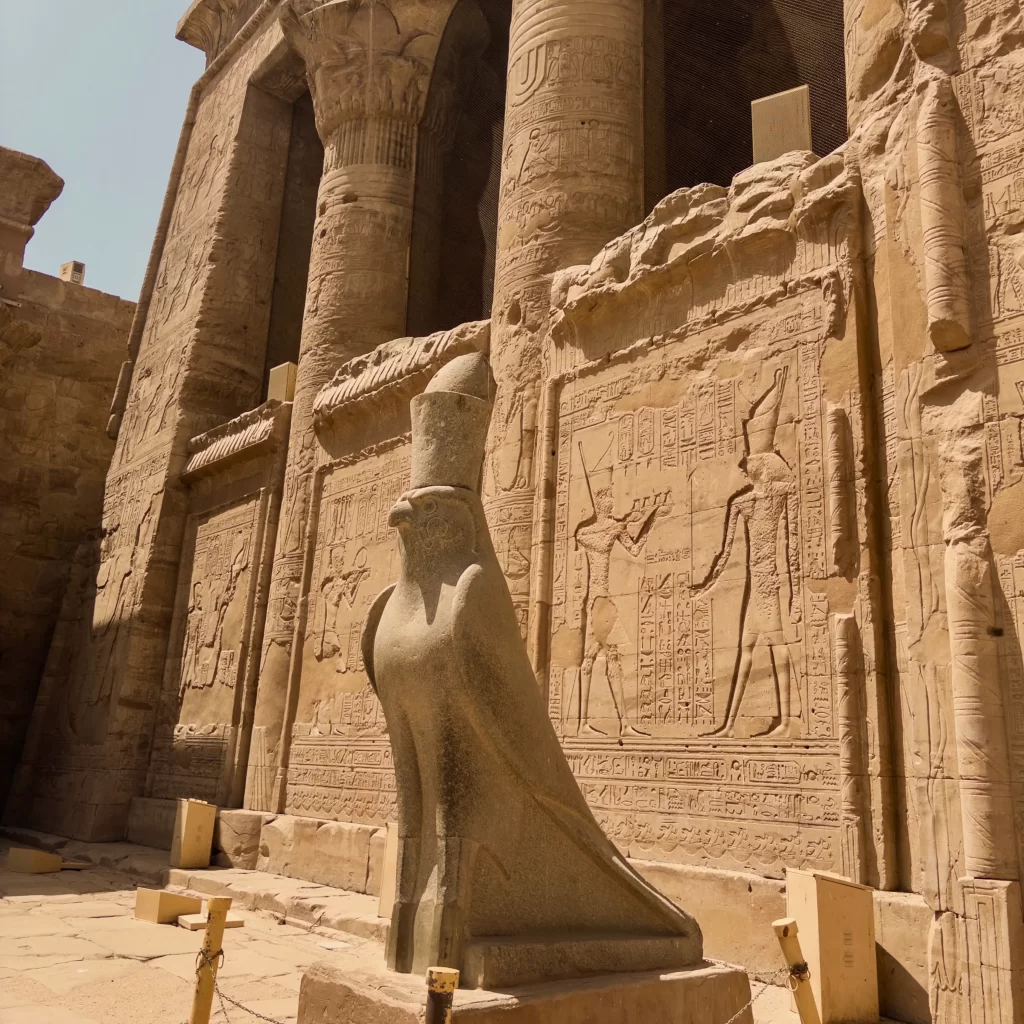
The Temple of Horus at Edfu is considered one of Egypt’s most impressive and best-preserved ancient temples. Construction began in 237 BC during the reign of Ptolemy III and continued for nearly two centuries under the Ptolemaic rulers. It was built on the site of an earlier New Kingdom sanctuary and dedicated primarily to Horus, the falcon-headed god, and Hathor of Dendera.
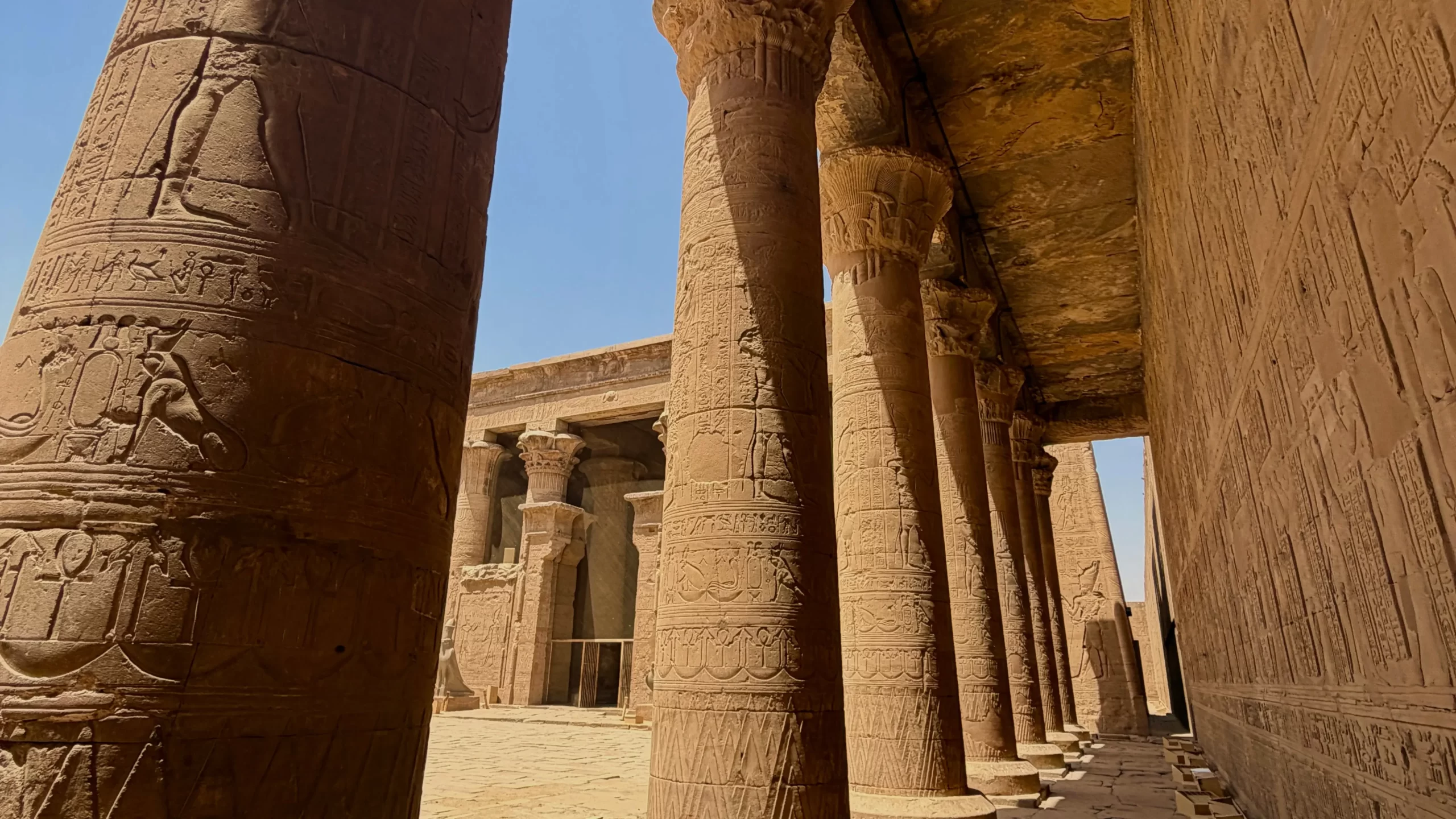
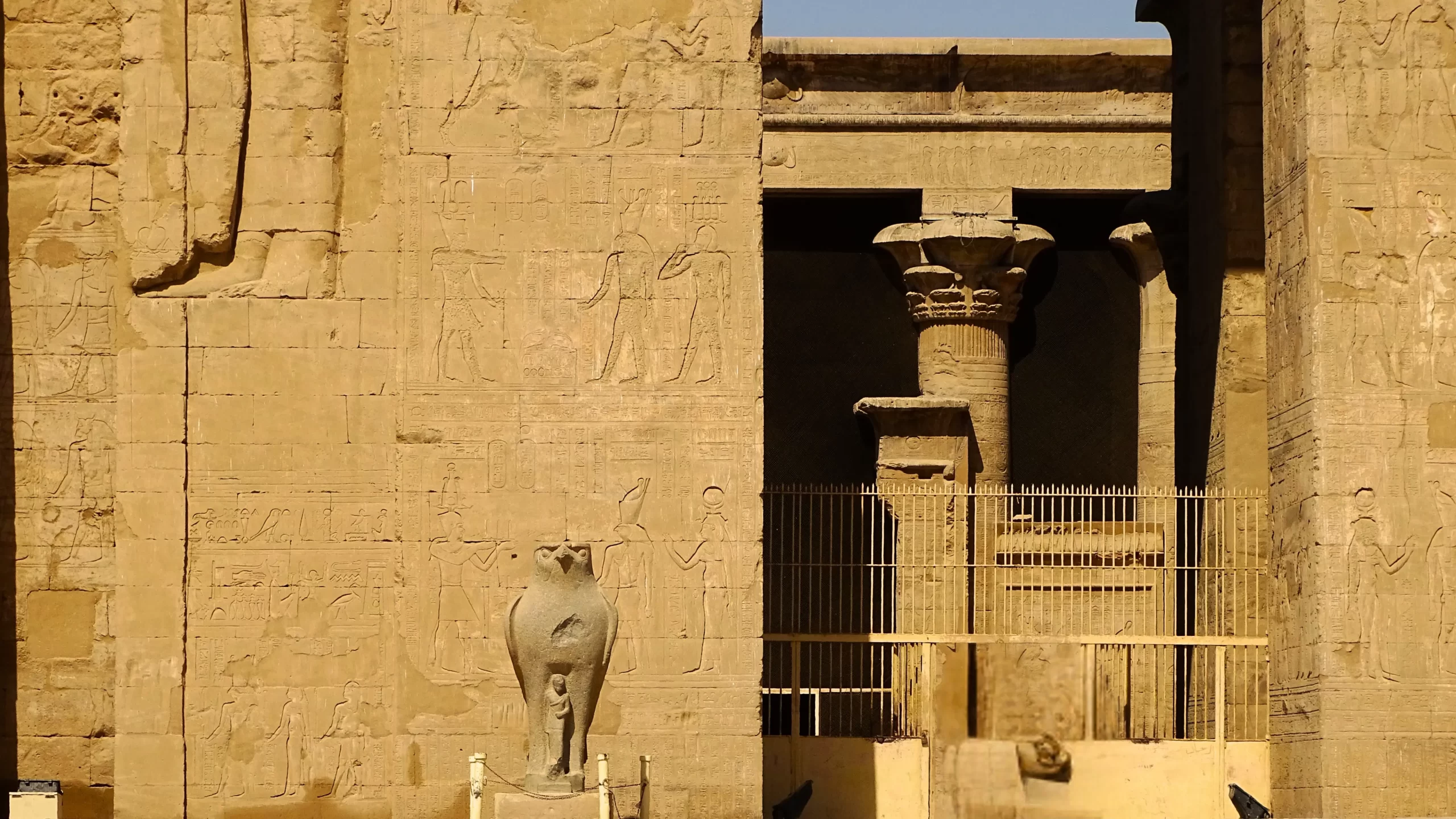
Approaching the temple, visitors are immediately struck by its monumental entrance pylon, rising dramatically above the surrounding town. Beyond the gateway lies a spacious courtyard, followed by grand halls filled with intricate reliefs and inscriptions that preserve ancient religious rituals, festivals, and myths.
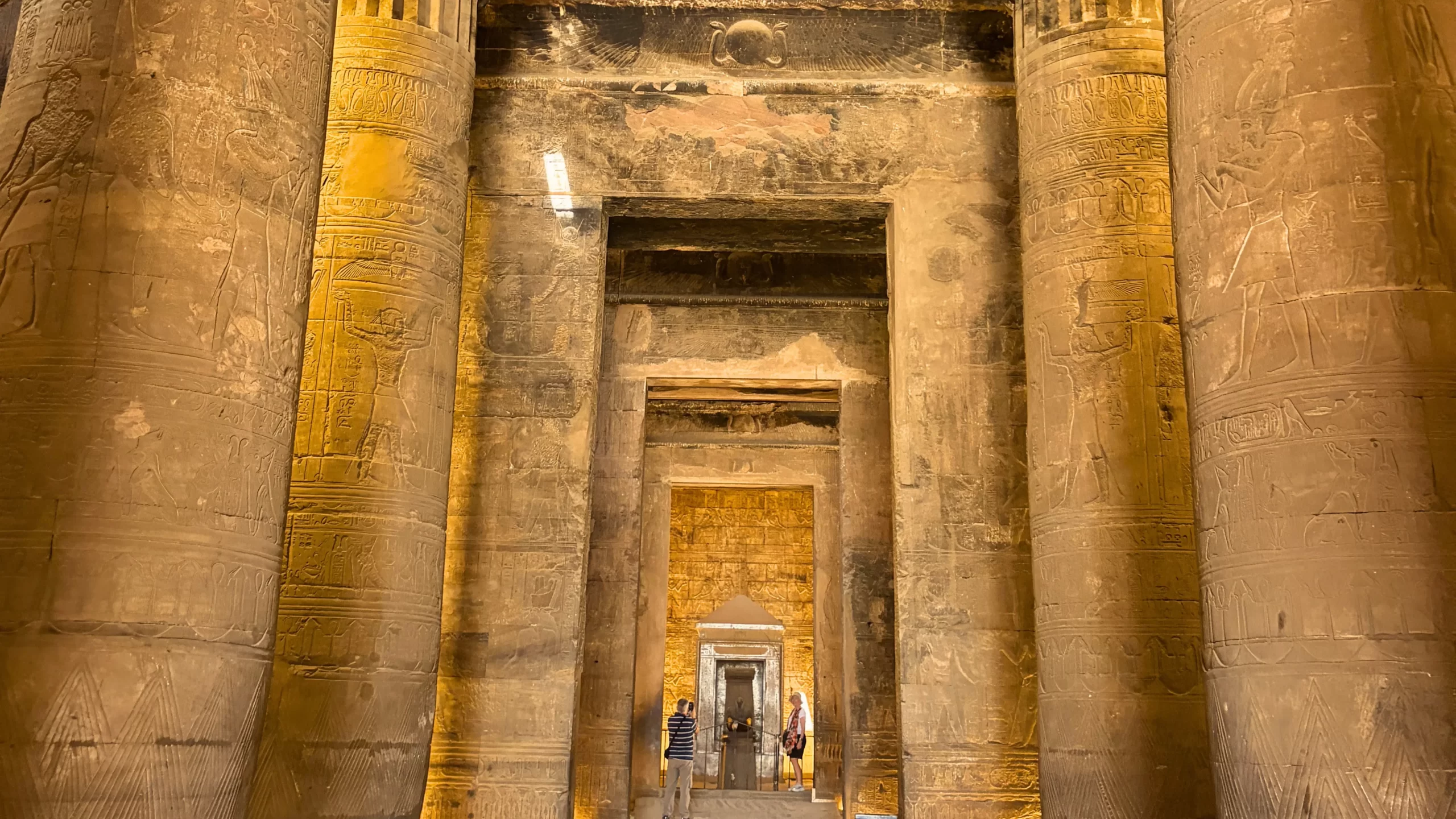
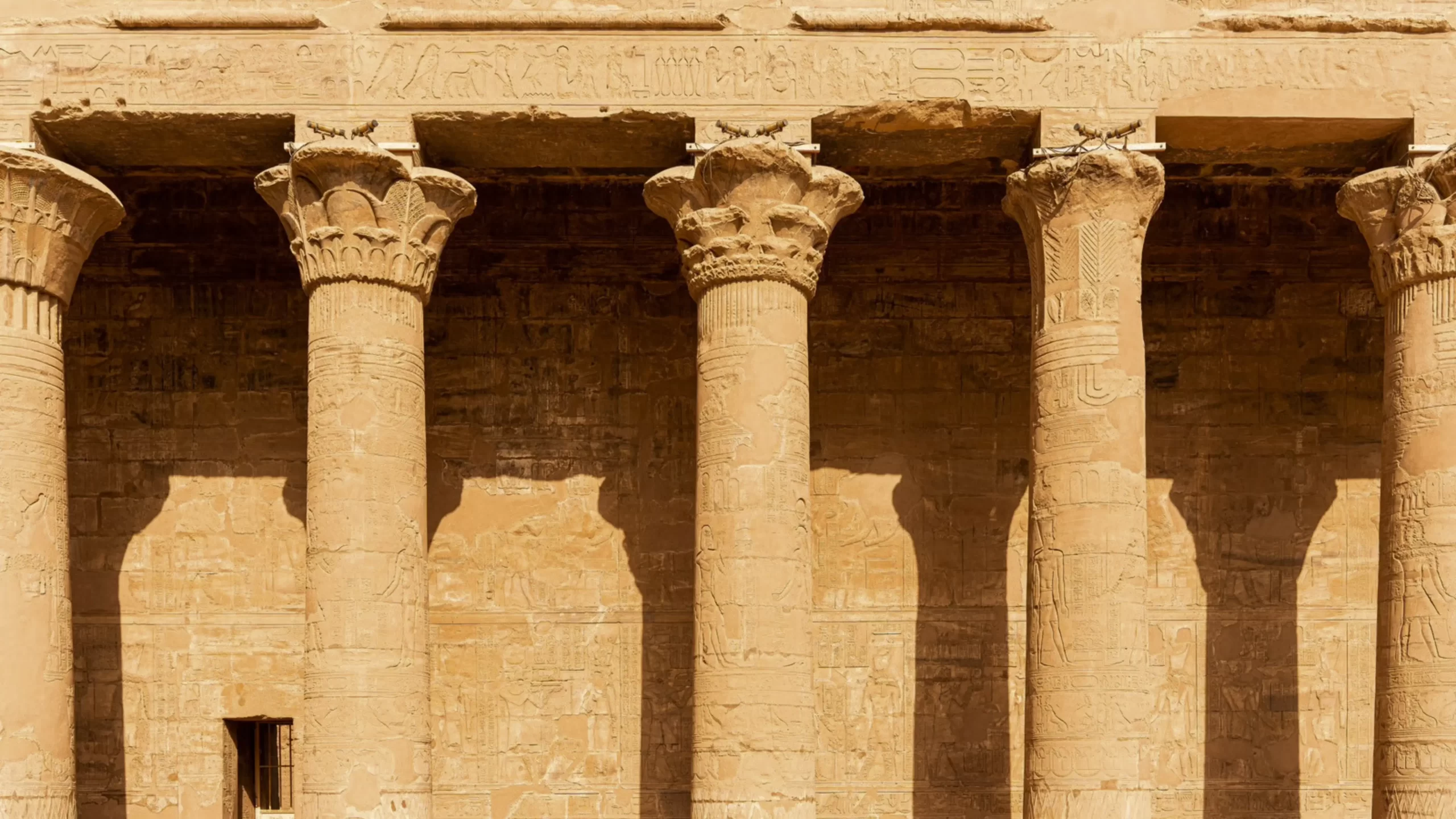
Inside, the atmosphere changes as visitors move through the hypostyle halls toward the sanctuary. Massive columns, dimly lit chambers, and sacred spaces create a powerful sense of connection to the spiritual world of ancient Egypt.
One reason the temple survives in such exceptional condition is that it remained buried beneath sand and settlement debris for centuries. Excavations began in the mid-19th century, revealing one of the most complete temple complexes in the country.
If time permits, visitors may also explore the local market streets of Edfu or view Tell Edfu, an archaeological mound containing remains of settlements dating from the Old Kingdom through the New Kingdom.
The Great Pylon
At over 36 meters high, the temple entrance is among the largest surviving pylons in Egypt and is covered with dramatic scenes of Horus defeating the forces of chaos.
Sacred Sanctuary
The temple's innermost chamber contains the granite shrine that once housed the sacred statue of Horus, making it the spiritual heart of the complex.
Exceptional Hieroglyphs
Walls throughout the temple preserve detailed inscriptions describing religious ceremonies, mythology, temple construction, and daily life in ancient Egypt.
“Because the temple remained buried for centuries, Edfu offers visitors one of the clearest and most complete examples of how an ancient Egyptian temple originally appeared.”
— Historical context note for guides
Visitor tips
The horse-drawn carriage ride from the dock is part of the Edfu experience and offers a unique view of local life.
Visit early in the morning to enjoy cooler temperatures and fewer visitors.
Take time to explore the inner halls and reliefs; some of Egypt's finest temple inscriptions are found here.
Wear comfortable walking shoes as the temple grounds are extensive and stone surfaces can be uneven.
Ask your guide to explain the mythological battle between Horus and Seth, which is depicted throughout the temple.
Visit Information
Hours: 7:00 – 17:00
Entry Fees: Subject to Ministry of Tourism rates
Best Time: October – April
Duration: 1.5–2 Hours Average
Access: Mostly Flat
Arrive at Edfu by Dahabiya
Experience Edfu the traditional way, arriving by sailboat on the Nile before taking a short carriage ride through town to one of Egypt’s most remarkable temples.
Nearby attractions
Kom Ombo Temple
Dual Temple · Sobek & Horus
65 km south
Gebel Silsila
Ancient Quarries · Rock Chapels
55 km north
Esna Temple
Khnum · Greco-Roman Temple
90 km north
Dendera Temple
Hathor · Exceptional Ceiling Reliefs